
How Does a Porta Potty Actually Work?
Under the seat sits a holding tank, 60 to 70 gallons on a standard unit. Waste drops in, a blue or green chemical solution goes to work breaking down solids and masking odor, and that's the whole system. No flush, no water line. The cabin itself is about 44 by 48 inches on the ground and stands roughly 92 inches tall, enough room for a construction worker in full gear to get in and out fast between tasks, including the guy sprinting across a job site when a construction worker running to a porta-potty can't wait for a break. Vents near the roofline pull odor up and out rather than letting it sit at nose level. When the tank fills, a technician pumps it during the scheduled visit and refills the chemical. That interval matters: ANSI/PSAI Z4.3 sets one service visit per week as the baseline for up to 10 users over a 40 hour week, which is why a busy crew or event often needs extra units or extra visits rather than one unit stretched thin. If you've ever wanted a how do porta potties work diagram to picture the tank, vents and chemical layer before you sign off on a rental, this section is the plain-language version of that. If you're comparing that baseline against your headcount, how many porta potties do I need walks through the math, and standard porta potty rental covers what comes standard on the unit itself.
How Do Flushable Porta Potties Work?
A flushable unit, sometimes called a deluxe model, uses a small onboard freshwater tank and a foot pump or handle to push a rinse of water into the bowl after use. It still drains into the same kind of holding tank underneath, just with a bit more water mixed in, so service intervals run similar to a standard unit. These show up most on weddings, upscale events and job sites where the client wants something closer to a real bathroom. Pricing runs higher than a standard unit because of the extra plumbing inside the cabin. Check deluxe flushable porta potty for what's included, and if you're weighing it against a full trailer setup, restroom trailer rental and the smaller 2 stall restroom trailer are worth a look for events in Murrieta expecting a steady crowd. A shower trailer works the same basic principle with a hot water heater added; see shower trailer rental.
How Does a Portable Sink Work?
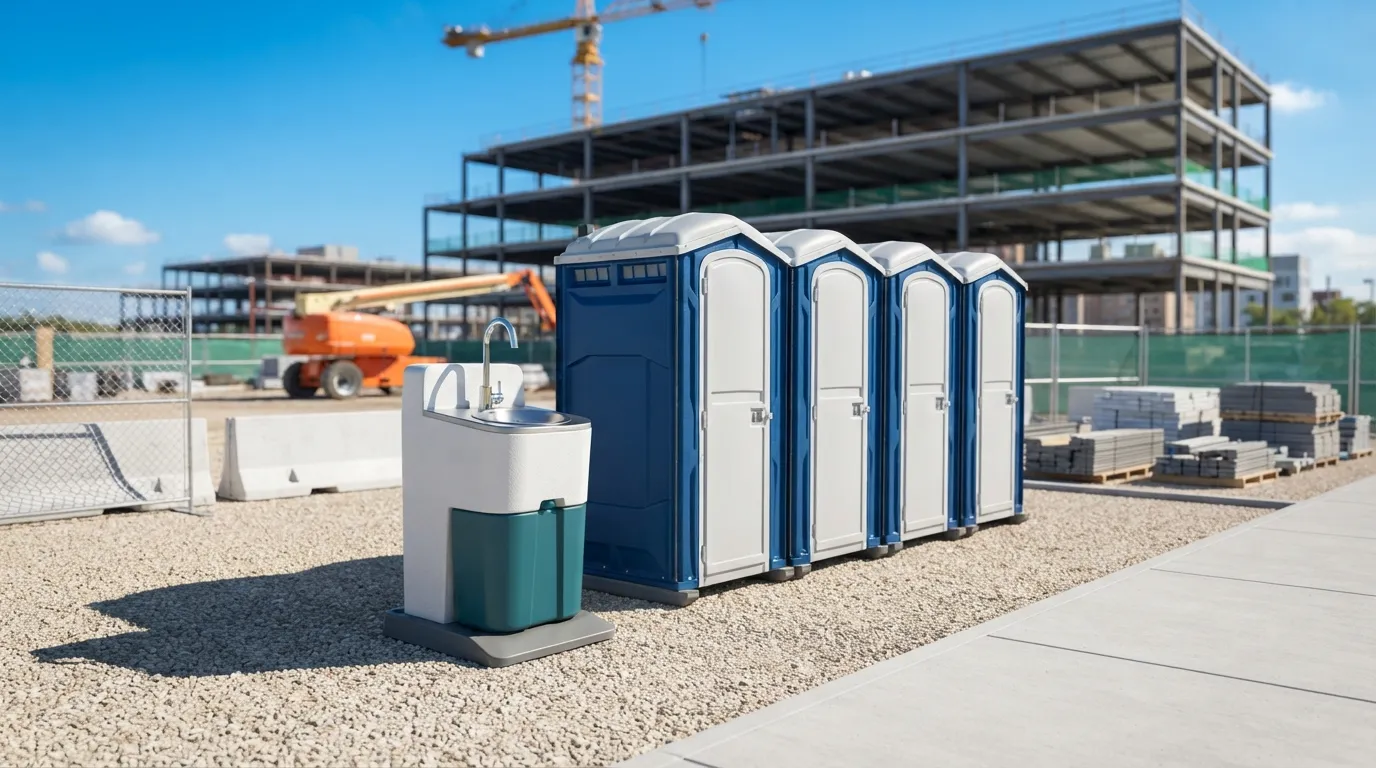
A portable sink runs off a built-in freshwater tank, usually gravity-fed or foot-pump activated, with a separate gray water tank underneath to catch runoff. No pipes, no hose bib needed. Soap dispensers and paper towel holders mount on the unit because 29 CFR 1910.141(d)(2) requires soap and towels or a hand-drying device at washing stations, not sanitizer alone. That's the standard we build to on every handwashing station and portable sink we place. People searching portable toilet chemicals near me are usually trying to figure out what's actually in that tank, and it's the same deodorizing solution described above, not something separate. Crews applying paints, coatings or pesticides need this kind of washing access under OSHA 1926.51(f)(1), which specifically covers contaminant exposure from those materials. See handwashing station rental for the stand-alone units or portable sink rental for sink-specific options, and handwashing requirements if you need the fuller breakdown for a permit application or safety plan.
Do Camping Porta Potties Work the Same Way?
Camping porta potties work on the same tank-and-chemical principle, just smaller and often self-contained for one or two users hauling their own unit. For a group site or an RV park drop-off in Murrieta, a standard rental unit from Murrieta Porta Pros does the job better than a camper's built-in cassette toilet, especially over a multi-day stay. We deliver and service these the same way we would for a construction site, just scaled to the headcount. If you're planning a weekend out near Lake Elsinore, 14.0 miles northwest of Murrieta, or anywhere closer to town, check camping porta potty for setup details. Chemical odor control matters more outdoors than people expect, since there's no building ventilation to help; the same deodorizing chemical used in job-site units handles that job in a camping setup too. It's a different product than septic tank cleaning chemicals, which work on a home's underground tank rather than a portable unit, so don't expect one to substitute for the other.
On a construction site, OSHA 1926.51(c) sets the toilet count: one facility per 20 workers or fewer, scaling up as crew size grows, and that ratio is the baseline we plan around for any job in Murrieta. An accessible unit needs a 60 inch turning circle per ADA Standards 304.3.1 and a door opening of at least 32 inches under ADA Standards 404.2.3, and when units are clustered, ADA Standards 213.2 requires at least one accessible unit in the group. For anyone bidding a job that needs to hit these numbers, OSHA portable toilet requirements and ADA accessible porta potty lay out what qualifies. If you need help just estimating unit count before you call, porta potty rental checklist is a good starting point, and porta potty placement guide covers where units need to sit relative to the work zone.
How often does a porta potty get serviced?
Weekly is the baseline under the ANSI/PSAI Z4.3 standard, covering up to 10 users over a 40 hour week. Busy construction sites or multi-day events usually need two or three visits weekly. Murrieta Porta Pros scales the schedule to your headcount, not the other way around.
What chemicals go in a porta potty?
A blue or green deodorizing solution, usually a mix of biocide and fragrance, breaks down waste and controls odor between pumps. It's added fresh at every service visit. Ask about eco-friendly formulations if that matters for your event or site. Some homeowners also ask about septic tank cleaning chemical products for their own tank between pump-outs; that's a separate system from a rented portable unit, and how often to pump a septic tank covers the maintenance side of that.
Do porta potties smell bad?
Less than people expect if they're serviced on schedule. Roof vents pull odor upward and the chemical treatment does most of the work. See do porta potties smell for what actually causes the smell people remember from bad experiences.
Can I get a porta potty delivered same day in Murrieta?
Often, depending on inventory and route timing that day. Emergency situations, like a broken septic line or a last-minute event addition, get priority. Call emergency porta potty rental or check request a quote to confirm same-day availability.
How much does a porta potty rental cost?
A standard unit typically runs 100 to 350 dollars a day depending on duration and delivery distance. Monthly and weekly rates bring the per-day cost down significantly. Full pricing detail is on porta potty rental cost and monthly porta potty rental.
Next step
Get a delivery date
Tell us the address, the dates and the headcount. We size the order and confirm the route.