
Where should a porta potty go on a job site?
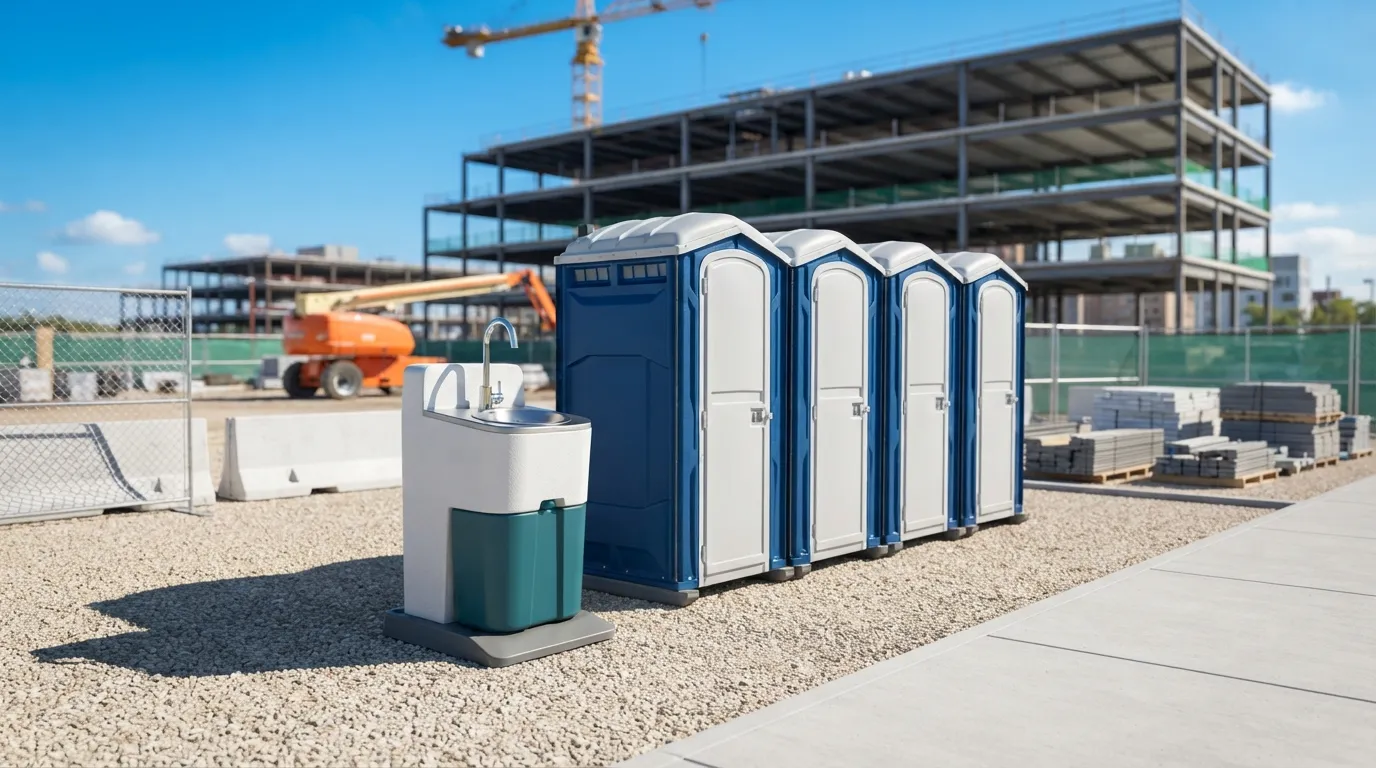
Put it close to the work but out of the path of forklifts, deliveries and foot traffic. On a Murrieta construction site, that usually means near the trailer or fence line, not in the middle of the laydown yard. OSHA 1926.51(c) sets the ratio: one toilet for 20 workers or fewer, then one seat and one urinal per 40 workers up to 200. Count heads before you count units, and check our placement checklist if you are staging more than a few. Ground matters too. A standard unit runs about 44 by 48 inches on its footprint and stands roughly 92 inches tall, so give it room against wind and foot traffic. If you are also running temporary fencing around the site, keep the toilet inside the fence line but near an access gate for servicing. Sites doing paint, coatings or pesticide work need a washing station under OSHA 1926.51(f)(1), placed near that work zone, not tucked behind the porta potty. For general construction site services in Murrieta, we walk the site with the foreman before the first unit ever gets set down.
Do I need a permit to place a porta potty in Murrieta?
Sometimes, and it depends on where the unit sits. A unit placed entirely on private property, off the sidewalk and street, usually does not need a city permit. Placement in the public right of way is different, and that needs confirming with the City of Murrieta before delivery. The same logic applies to a dumpster placement permit: a driveway drop is simple, a street or curb drop is not, and dumpster placement permit cost varies enough between jurisdictions that we always check first rather than guess. If your event or renovation needs street space at all, ask us before you book so we can flag it. See porta potty permit requirements for the fuller rundown, and dumpster permit requirements if you are ordering both.
How far from a building or property line should it sit?
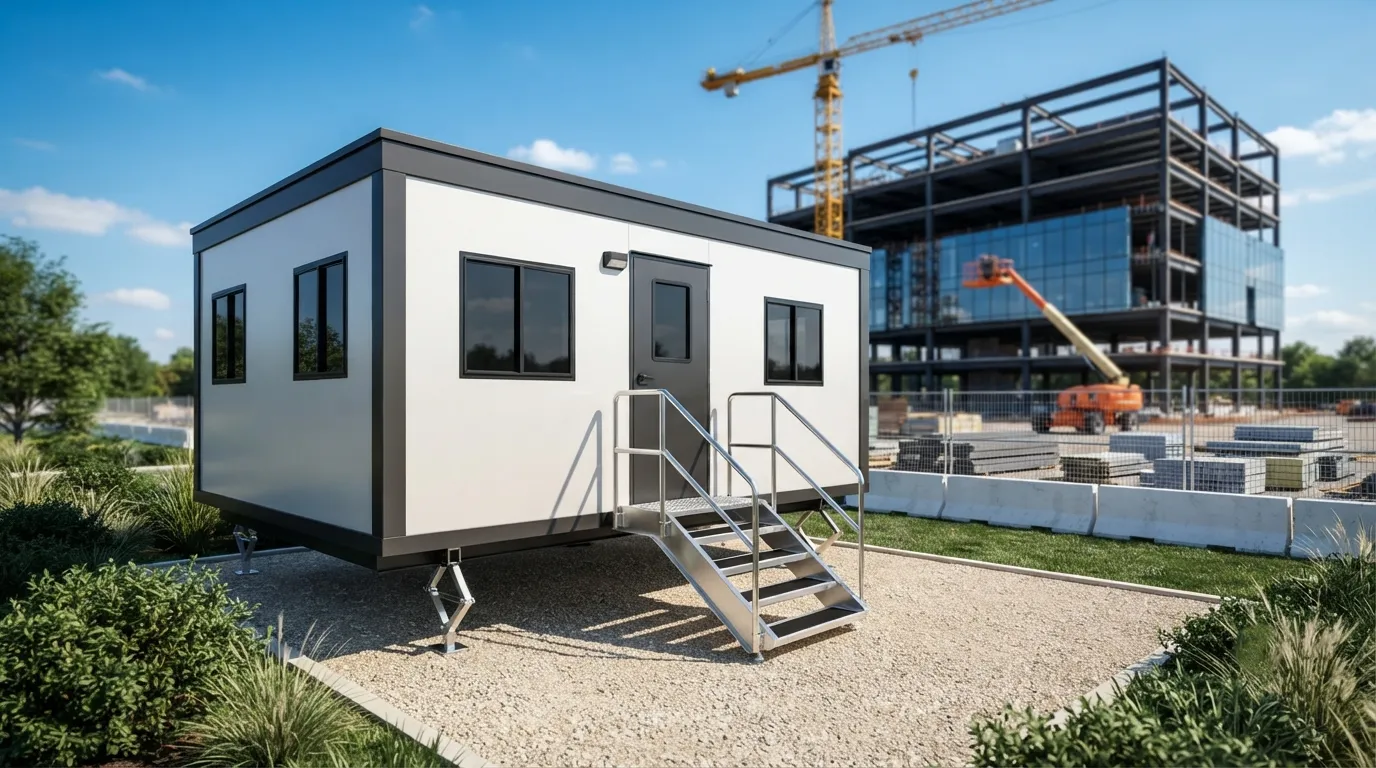
Leave enough setback that odor and swing-door clearance are not a daily complaint. There is no single number we can cite here since it is not in a code we have verified for Murrieta, but the practical minimum is a clear 36 inch path per ADA Standards section 403.5.1 and enough distance from windows and entrances that servicing trucks are not backing past your front door. If you are placing an ADA accessible unit, remember ADA Standards section 213.2 requires at least 5 percent of clustered units be accessible, and that unit needs its own 60 inch turning circle under section 304.3.1. A deluxe flushable unit or a full restroom trailer needs a level pad and, for the trailer, a nearby power source. If the trailer is doubling as a mobile office trailer rental setup on a long job, plan for that pad early since moving it later costs a truck trip. Some crews ask about mobile office trailer replacement doors when a door gets damaged on-site; that is a maintenance call to us, not a placement question, but it does affect how close you can safely park equipment.
Can placement affect servicing and pickup?
Yes, and this is where most delivery delays come from. Trucks need that 60 foot straight approach we mentioned, plus room to angle in without clipping a fence or parked car. A unit tucked behind a dumpster or storage container is hard to service on schedule, and ANSI/PSAI Z4.3 sets the baseline service interval at once a week for up to 10 users over a 40 hour week, so blocked access adds up fast. If you are also running a storage container or 10 yard dumpster on the same lot, map both drop zones before either truck shows up. Septic access matters the same way. A residential tank is typically pumped every 3 to 5 years depending on tank size and household, per our septic pumping service team, and the truck needs a clear path to the cleanout, not a parked car over it. We field a few calls a year from folks searching placerville septic pumping service by mistake. We do not cover Placerville, but we do run septic tank cleaning and emergency septic service across Murrieta and out to Wildomar, 7.0 miles northwest, and French Valley, 7.1 miles east.
| unit | day | week | month |
|---|---|---|---|
| standard | 100-350 | 130-500 | 125-325 |
| ada | 200-400 | 120-240 | n/a |
| deluxe | 85-1200 | 150-290 | n/a |
How many porta potties do I need for a small crew?
For 20 workers or fewer, one unit satisfies OSHA 1926.51(c). Add a second once you cross that line, plus a urinal per the 40-worker step. See how many porta potties do I need for event math, which runs differently than job sites.
Does a portable sink need its own placement plan?
Yes. It should sit near food handling or paint and coating work, not off in a corner, since OSHA 1926.51(f)(1) ties washing facilities to that contaminant exposure. Check portable sink rental for unit options, including parts questions like ozark river portable sink replacement parts, which we can source on request.
Is a hand sanitizer station a substitute for handwashing?
No. 29 CFR 1910.141(d)(2) requires soap and towels or a hand-drying device; sanitizer alone does not meet that. Pair a hand sanitizer station with a real handwashing setup, not instead of one.
Where should a dumpster sit relative to the porta potty?
Keep at least a truck's width between them so both trucks can maneuver without conflict. Check dumpster sizes and dimensions before you plan the pad, and confirm dumpster weight limits if the load will be heavy debris.
Can placement change once the unit is delivered?
Yes, within reason. A short move on flat ground is usually simple. A full relocation across the Murrieta site may cost a second delivery trip, so it helps to get the request a quote walkthrough right the first time.
Next step
Get a delivery date
Tell us the address, the dates and the headcount. We size the order and confirm the route.